Recycled nylon: When technology is no longer the bottleneck
——Zhao Juan, Senior analyst at CCFGroup
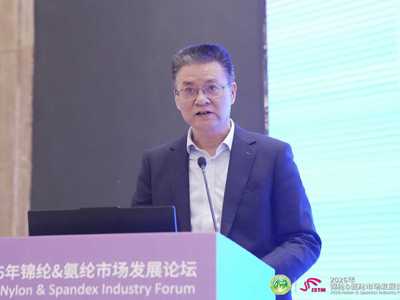
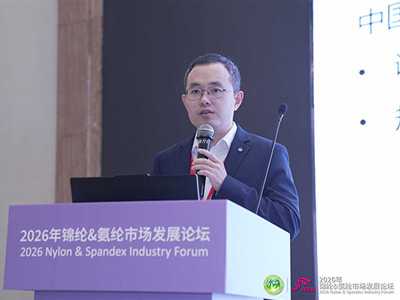
Ms. Zhao Juan, Senior analyst at CCFGroup, delivered her report Recycled nylon: When technology is no longer the bottleneck, comprehensively reviewing the technological evolution and market landscape of recycled nylon worldwide and in China, and pointing out that after technological breakthroughs, the core bottleneck facing the industry has shifted to feedstock supply and system development.

The report notes that the global recycled nylon industry has now fully shifted to policy-driven development. Although China started late, its development has been extremely rapid: the industry's processes have gone through a blowout period of diversified breakthroughs from a single physical method to supercritical and chemical methods, with enzymatic hydrolysis planned for 2027-2028. Currently, Chinese mainland's recycled nylon 6 textile filament processes are gradually converging with global progress. China's recycled nylon filament output has passed the early slow ramp-up and blowout phases and entered a stage of steady growth at over 20%.
When technology is no longer the bottleneck, the structural constraint on post-consumer feedstock supply has become the biggest obstacle.
Although China's old clothing recycling rate has risen to 26%, less than 1% actually enters closed-loop recycling. The capacity for fine sorting of waste textiles is severely insufficient, making it impossible to supply recycled plants by fiber composition. Building a closed loop requires massive capital investment and well-developed infrastructure. China is forcing industry standardization through the 15th Five-Year Plan for Circular Economy Development and is leading efforts to tackle a full-process recycling technology system; Europe's ReHubs alliance also points out that tens of billions of euros in capital investment will be needed by 2035 to build economies of scale.
To expand the whole industry and truly achieve a closed-loop brand supply chain, the decisive factors going forward lie in "fine sorting" and "recycling infrastructure development." Whoever secures a stable source of post-consumer feedstock will hold the initiative in the future recycled nylon market.